 by
by 
Autism Spectrum Disorder: Types, Levels, Signs, Causes & More
Autism Spectrum Disorder (ASD) affects communication, behavior, and social skills. It’s a neurodevelopmental condition showing up in early childhood (ages 0-6), varying widely from mild to severe. Not all autistic people share the same traits—it’s truly a spectrum.
Table of Contents
- What Is Autism Spectrum Disorder?
- Types of Autism (Pre-2013 Terms)
- Levels of Autism Spectrum Disorder
- Early Signs of Autism & When to Seek Help
- Changes in Autism Terminology
- Causes of Autism
- How Autism Affects Children
- How Common Is Autism?
What Is Autism Spectrum Disorder?
Autism Spectrum Disorder (ASD) impacts social interaction, communication, and behavior. Per DSM-5 (2013), it’s one diagnosis covering a wide range of symptoms and abilities.
Common traits include:
- Verbal/nonverbal communication challenges
- Limited social engagement
- Repetitive behaviors or intense interests
- Sensory sensitivities
- Delayed language or motor skills
Severity varies—some need minimal support, others lifelong care.
Types (Pre-2013 Terms)
DSM-5 merged subtypes into ASD, but old terms linger in conversation. Here’s a quick overview:
- Asperger Syndrome (now Level 1 ASD): High-functioning with strong language/IQ, subtle social differences.
- Kanner Syndrome (Classic Autism): Severe delays in social/emotional bonds, speech issues, object obsessions.
- Rett Syndrome: Mostly girls; early regression in motor skills, speech, breathing. Manageable with care.
- Childhood Disintegrative Disorder (CDD/Heller’s): Normal development until ages 2-10, then sudden loss in skills; common in boys, often with epilepsy.
- PDD-NOS (Atypical Autism): Doesn’t fully fit other criteria; social/language delays.
- Severe Autism (Level 3): Needs full daily support.
The “broad autism phenotype” describes mild, undiagnosed traits in relatives.
Levels of Autism Spectrum Disorder
ASD has 3 support levels based on needs:
| Level | Description | Key Challenges |
|---|---|---|
| Level 1 (Requiring Support) | Mild; can function independently with help. | Social initiation issues, rigid routines, monotone speech. |
| Level 2 (Substantial Support) | Marked deficits; limited social responses. | Obvious verbal/nonverbal struggles, repetitive behaviors. |
| Level 3 (Very Substantial Support) | Severe; minimal speech/interaction. | Intense behaviors, sensory sensitivities, environmental distress. |
Early Signs & When to Seek Help
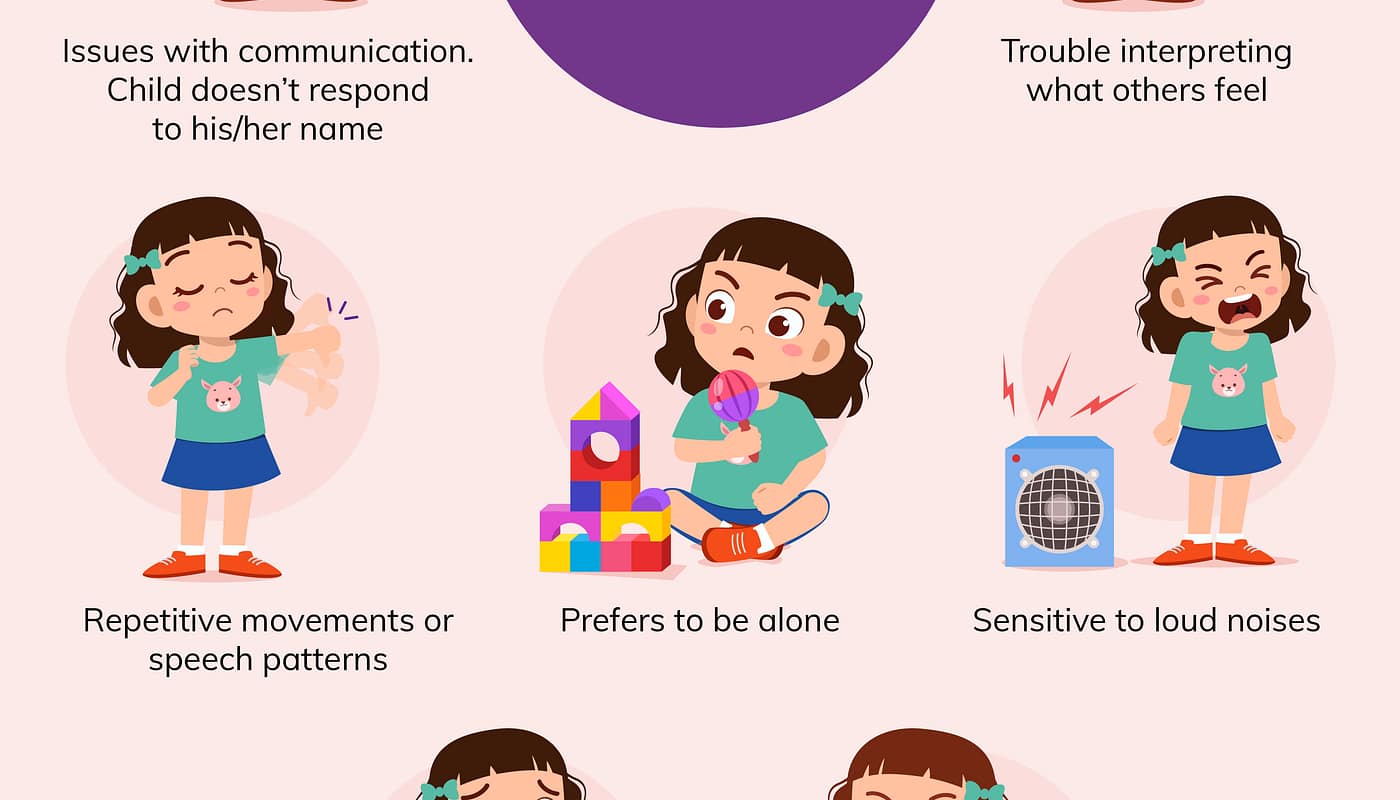
Spot early signs of autism by 12-24 months:
- No response to name
- Poor eye contact
- No babbling/speech delays
- Repetitive movements (e.g., hand-flapping)
- Sensory overload or meltdowns
Seek help from a pediatrician if noticed. Early intervention boosts outcomes.
Changes in Terminology
DSM-5 (2013) unified terms under ASD to reflect the spectrum’s complexity. Dropped “high-functioning” or subtypes—focuses on individual needs, not labels.
Causes
No single cause of autism. Likely combo of:
- Genetics (family history, mutations)
- Environmental factors (parental age, low birth weight, prenatal exposures)
- Brain differences
Vaccines do NOT cause autism—debunked by extensive research.
How Autism Affects Children
Autism in children shows in:
- Communication: Echolalia, nonverbal cue struggles, monotone speech.
- Behavior: Routine rigidity, peer play issues, sensory reactions.
- Development: Motor delays, hyperlexia (reading without understanding).
Red flags: No two-word phrases by 24 months, skill regression.
How Common Is Autism Spectrum Disorder?
Per CDC: 1 in 36 U.S. children (2023 data) have ASD—boys 4x more likely. Affects ~2.2% of adults. Prevalence rose 10-17% recently due to better diagnosis. Support needs vary widely.




This is a very informative piece about autism and its spectrum. It’s interesting how the DSM-5 has streamlined the diagnosis under ASD, but I wonder if this has made it easier or more challenging for families to understand and navigate. The mention of Asperger’s and PDD still being used in discussions, despite not being official diagnoses, is something I’ve noticed too—do you think this causes confusion? I appreciate the emphasis on the varying severity levels, as it highlights the uniqueness of each individual’s experience. However, I’m curious about how society’s understanding of autism has evolved since 2013. Do you think the general public is more aware now, or is there still a lot of stigma? Also, what are your thoughts on the term “high-functioning autism”? Doesn’t it risk minimizing the struggles of those labeled as such? I’d love to hear your perspective!
This is a very informative piece about autism and its spectrum. It’s interesting how the DSM-5 has streamlined the diagnosis under ASD, but I wonder if this has made it easier or more confusing for parents and professionals. The mention of Asperger’s and PDD still being used in discussions despite not being official diagnoses is something I’ve noticed too—do you think this creates clarity or adds to the ambiguity? I appreciate the breakdown of the different levels of autism, but I’m curious how these levels are determined in practice. The text highlights the challenges in recognizing symptoms, which makes me think about how awareness can be improved. What’s your take on the term “high-functioning autism”? Does it help in understanding or does it oversimplify the experience? I’d love to hear your thoughts on how society can better support individuals with ASD.
Autism is such a complex and multifaceted topic, and it’s fascinating how much our understanding of it has evolved over the years. I appreciate how the text highlights the shift to the umbrella term ASD, which seems to better capture the spectrum of experiences. It’s interesting that terms like Asperger’s and PDD are still used informally, even if they’re no longer official diagnoses. I wonder how this change in terminology has impacted the way people perceive and support those with autism. The mention of the three levels of autism is helpful, but I’m curious—how do these levels translate into real-life support and accommodations? It’s also worth noting how much the severity of symptoms can vary, which makes me think about the importance of individualized approaches. What do you think is the most challenging aspect of raising awareness about the diversity within the autism spectrum?