by
by 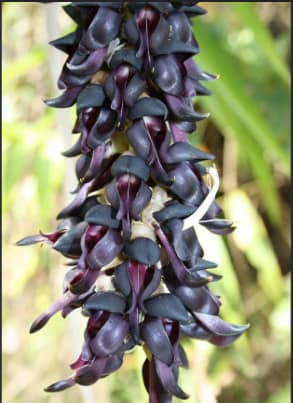
Mucuna pruriens (Fabaceae) is an established herbal drug used for the management of male infertility, nervous disorders, and also as an aphrodisiac. It has been shown that its seeds are potentially of substantial medicinal importance. The ancient Indian medical system, Ayurveda, traditionally used M. pruriens, even to treat such things as Parkinson’s disease. M. pruriens has been shown to have anti-parkinson and neuroprotective effects, which may be related to its anti-oxidant activity. In addition, anti-oxidant activity of M. pruriens has been also demonstrated in vitro by its ability to scavenge DPPH radicals and reactive oxygen species. In this review the medicinal properties of M. pruriens are summarized, taking in consideration the studies that have used the seeds extracts and the leaves extracts.
Keywords: Mucuna pruriens, Phytochemicals, Antioxidant, Parkinson’s disease, Skin, Diabetes
Mucuna pruriens (Kaunch):The Ayurvedic Nerve and Reproductive Tonic
Hindi Name: कौंच (Kaunch) / कपिकच्छु (Kapikacchu)
Botanical Name: Mucuna pruriens
Plant Family: Fabaceae (Legume family)
Common Name: Velvet bean
Introduction
The genus Mucuna, belonging to the Fabaceae family, sub family Papilionaceae, includes approximately 150 species of annual and perennial legumes. Among the various under-utilized wild legumes, the velvet bean Mucuna pruriens is widespread in tropical and sub-tropical regions of the world. It is considered a viable source of dietary proteins (Janardhanan et al., 2003; Pugalenthi et al., 2005) due to its high protein concentration (23–35%) in addition its digestibility, which is comparable to that of other pulses such as soybean, rice bean, and lima bean (Gurumoorthi et al., 2003). It is therefore regarded a good source of food.
The dozen or so cultivated Mucuna spp. found in the tropics probably result from fragmentation deriving from the Asian cultigen, and there are numerous crosses and hybrids (Bailey and Bailey, 1976). The main differences among cultivated species are in the characteristics of the pubescence on the pod, the seed color, and the number of days to harvest of the pod. “Cowitch” and “cowhage” are the common English names of Mucuna types with abundant, long stinging hairs on the pod. Human contact results in an intensely itchy dermatitis, caused by mucunain (Infante et al., 1990). The nonstinging types, known as “velvet bean” have appressed, silky hairs.
The plant M. pruriens, widely known as “velvet bean,” is a vigorous annual climbing legume originally from southern China and eastern India, where it was at one time widely cultivated as a green vegetable crop (Duke, 1981). It is one of the most popular green crops currently known in the tropics; velvet beans have great potential as both food and feed as suggested by experiences worldwide. The velvet bean has been traditionally used as a food source by certain ethnic groups in a number of countries. It is cultivated in Asia, America, Africa, and the Pacific Islands, where its pods are used as a vegetable for human consumption, and its young leaves are used as animal fodder.
The plant has long, slender branches; alternate, lanceolate leaves; and white flowers with a bluish-purple, butterfly-shaped corolla. The pods or legumes are hairy, thick, and leathery; averaging 4 inches long; are shaped like violin sound holes; and contain four to six seeds. They are of a rich dark brown color, and thickly covered with stiff hairs. In India, the mature seeds of Mucuna bean are traditionally consumed by a South Indian hill tribe, the Kanikkars, after repeated boiling to remove anti-nutritional factors. Most Mucuna spp. exhibit reasonable tolerance to a number of abiotic stresses, including drought, low soil fertility, and high soil acidity, although they are sensitive to frost and grow poorly in cold, wet soils (Duke, 1981). The genus thrives best under warm, moist conditions, below 1500 m above sea level, and in areas with plentiful rainfall. Like most legumes, the velvet bean has the potential to fix atmospheric nitrogen via a symbiotic relationship with soil microorganisms.
you may also like https://thrievly.com/ayurvedic-diet-eating-according-to-your-dosha/
Origin and Habitat of Mucuna pruriens
Kaunch is native to the tropical regions of Asia and Africa. In India, it thrives in warm and humid climates, especially in states like Maharashtra, Tamil Nadu, and Kerala. This fast-growing climbing vine is easily recognized by its purple flowers and hairy seed pods, which can cause skin irritation if touched.
Plant Description of Mucuna pruriens
- Type: Climbing vine
- Flowers: Purple or lavender
- Seed Pods: Covered with fine hairs that cause itching
- Parts Used: Seeds (most commonly), roots, and leaves
Medicinal Benefits of Mucuna pruriens
1. Supports Neurological Health
- Contains L-DOPA (Levodopa), a natural precursor to dopamine, the brain’s “feel-good” chemical.
- Used as a natural aid in managing Parkinson’s disease.
- Helps improve mood, memory, and motivation.
2. Enhances Male Reproductive Health
- Long used in Ayurveda to:
- Increase testosterone levels
- Improve sperm quality and count
- Boost libido and stamina
3. Powerful Antioxidant and Anti-inflammatory
- Protects nerve tissues from oxidative stress.
- Helps reduce inflammation and supports joint health.
4. Traditional Snakebite Remedy
- Tribal communities have used it to neutralize snake venom, particularly from cobras and vipers.
Safety and Precautions of Mucuna pruriens
- Raw seeds can be toxic—they must be processed properly before use.
- Overconsumption may lead to side effects like:
- Nausea
- Irregular heartbeat (due to dopamine imbalance)
- The hairy seed pods can cause intense itching on contact.
- L-DOPA, if improperly metabolized, can break down into harmful compounds.
- Always consult a qualified Ayurvedic doctor or healthcare provider before medicinal use.
Summary
Kaunch (Kapikacchu) is a powerful Ayurvedic herb known for its benefits to the nervous system, reproductive health, and overall vitality. While it offers multiple therapeutic advantages, it must be used with care and under guidance due to its potent bioactive compounds.